
Core pouch-making stages
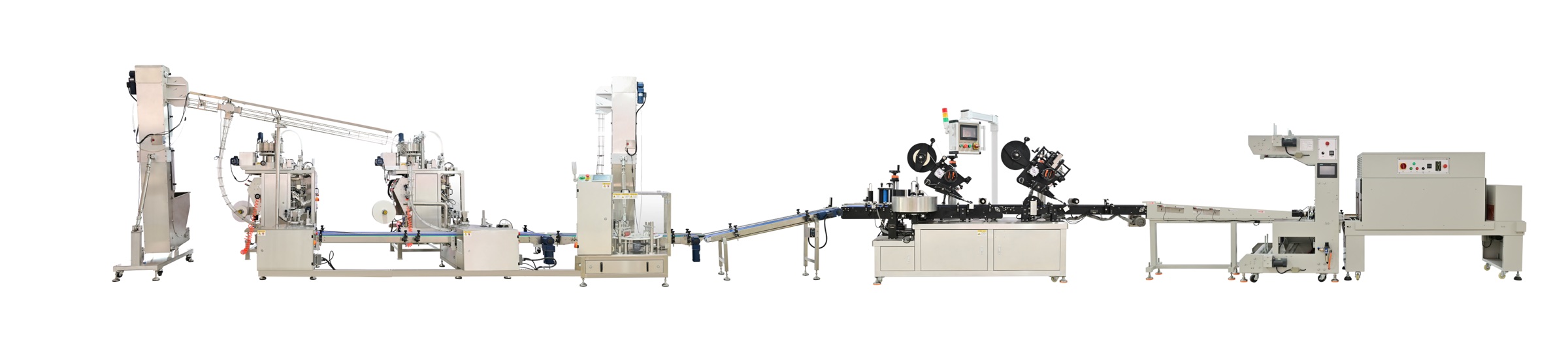
- Feed material: prepared material enters the selected metering system.
- Dose: the machine portions the target fill into the forming path.
- Form and seal: non-woven web forms around the product and receives longitudinal and transverse seals.
- Cut and discharge: finished pouches are separated and leave the pouching module.
Optional downstream stages
| Stage | What it does | When it is needed |
|---|---|---|
| Transfer and buffering | Moves pouches between machines and balances short interruptions. | When pouching and finishing equipment run at different cycle patterns. |
| Counting and can filling | Counts pouches into the specified retail can quantity. | For canned nicotine pouch products. |
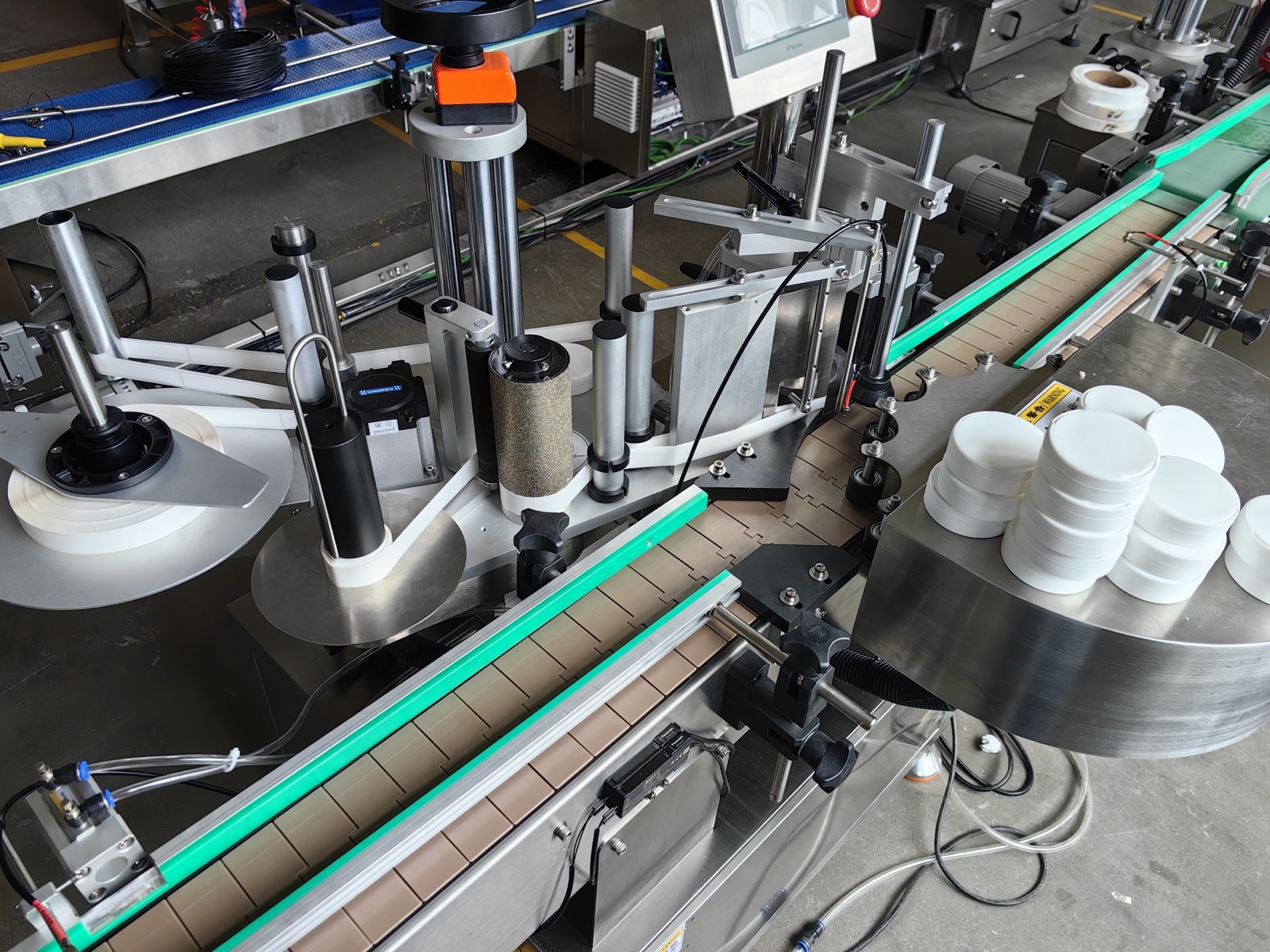
| Lidding | Feeds, orients and presses lids onto filled cans. | When automatic can closure is required. |
| Labelling | Applies top, bottom or wraparound labels. | When decoration and product information are applied after filling. |
| Secondary packaging | Wraps or cartons finished retail units. | For grouped shipping or shelf-ready packs. |
Balance the line around real output
Each module has its own operating range. The slowest verified stage, transfer design, buffer capacity and reject logic determine the complete line output. Do not use a pouching-module value as a guaranteed complete-line rate without a line-balance calculation.
Common questions
Does every line need can filling?
No. Pouches may discharge loose, enter an individual outer wrap or continue to a can line depending on the final pack.
Which output figure should be used?
Use the verified rate of the complete balanced line under the agreed material and pack conditions.
Can downstream equipment be added later?
Often yes, but reserve the product hand-off, floor space, controls and required buffer from the beginning.