The practical differences
| Decision | Single-lane | Multi-lane |
|---|---|---|
| Product path | One forming, filling and sealing route | Several synchronized routes |
| Output basis | Total machine rate | Per-lane rate × active lanes |
| Changeover | One lane to set and validate | All lanes must remain aligned |
| Downstream flow | One discharge stream | Combined or parallel discharge must be balanced |
| Best starting point | One stable pouch specification | Higher-volume project with tested material |
Do not compare lane count without the rate basis
The documented high-speed single-lane configuration lists 180–220 pouches per minute. The four-lane configuration lists 30–45 pouches per minute per lane. These numbers describe different machine formats and should only be compared after confirming material, pouch dimensions, metering method and acceptable quality at the target speed.
The homepage's multi-lane banner is a representative multi-lane image. It is not the four-lane machine specification. Use the dedicated product pages to keep model images and parameters separate.
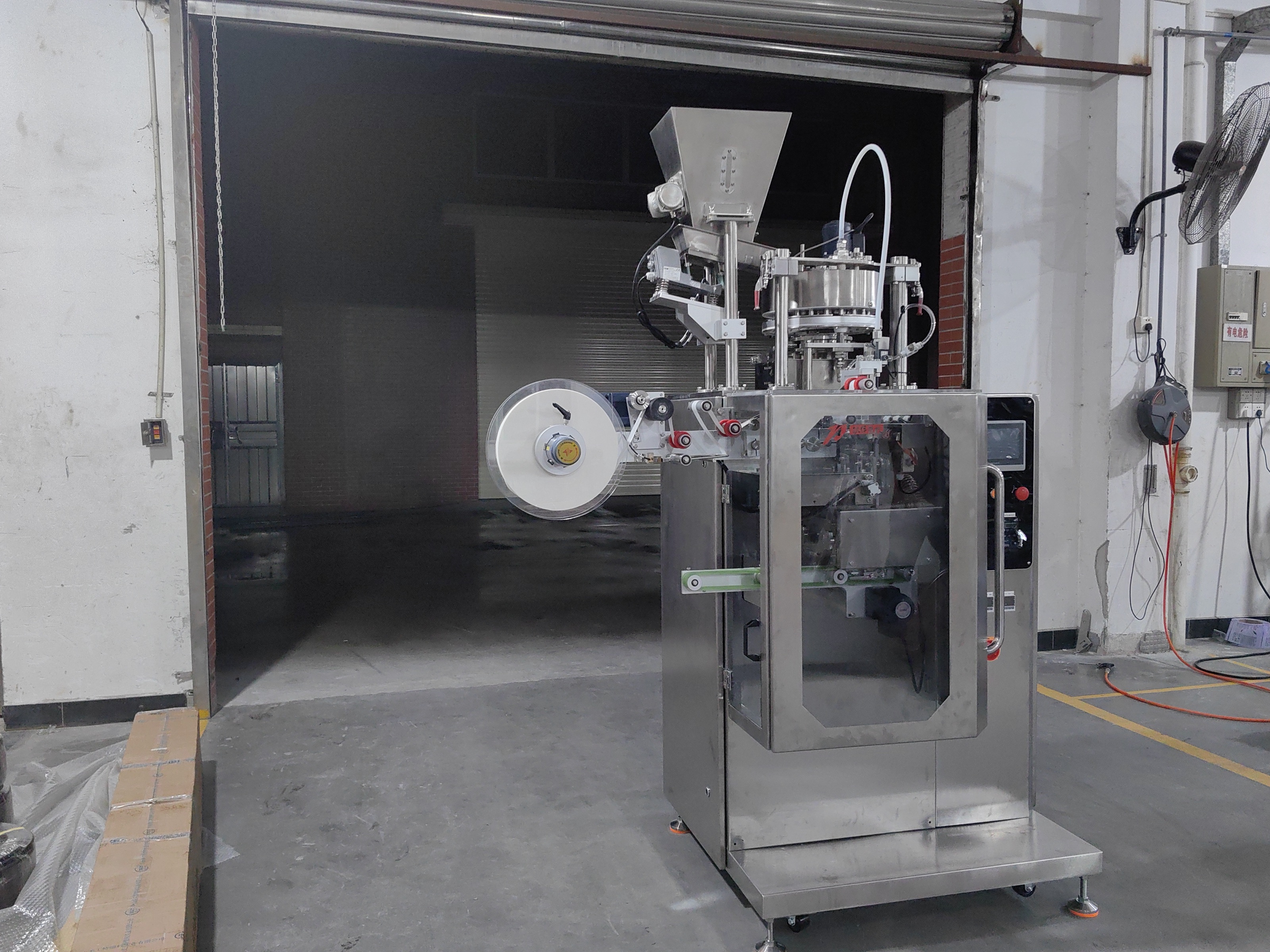
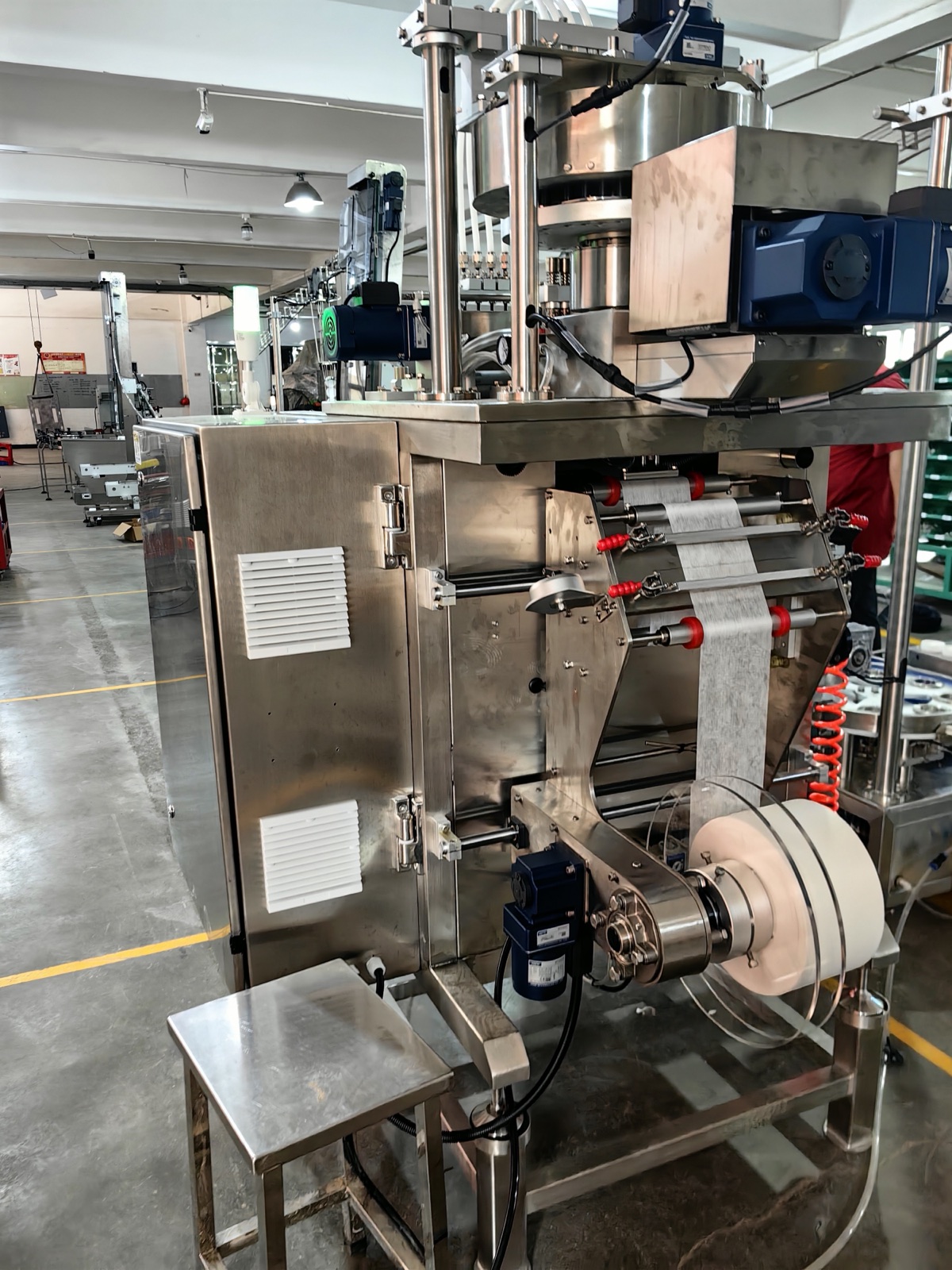
Look at the real material and machine path
Common questions
Is a four-lane machine always faster than a single-lane machine?
No. Compare the documented rate, product and pouch format. Lane count by itself does not establish final output.
Which format is easier to connect to can filling?
Either can be connected, but the discharge rate, buffering and can-counting stage must be balanced with the pouch machine.
Can the same fill system be used for dry and moist material?
Not automatically. Confirm material moisture and flow with the intended metering system before final selection.