Five inputs determine the machine format
- Material condition: dry or moist material changes the metering method and cleaning requirements.
- Fill weight: compare the target with the machine's documented metering range—not only a nominal example.
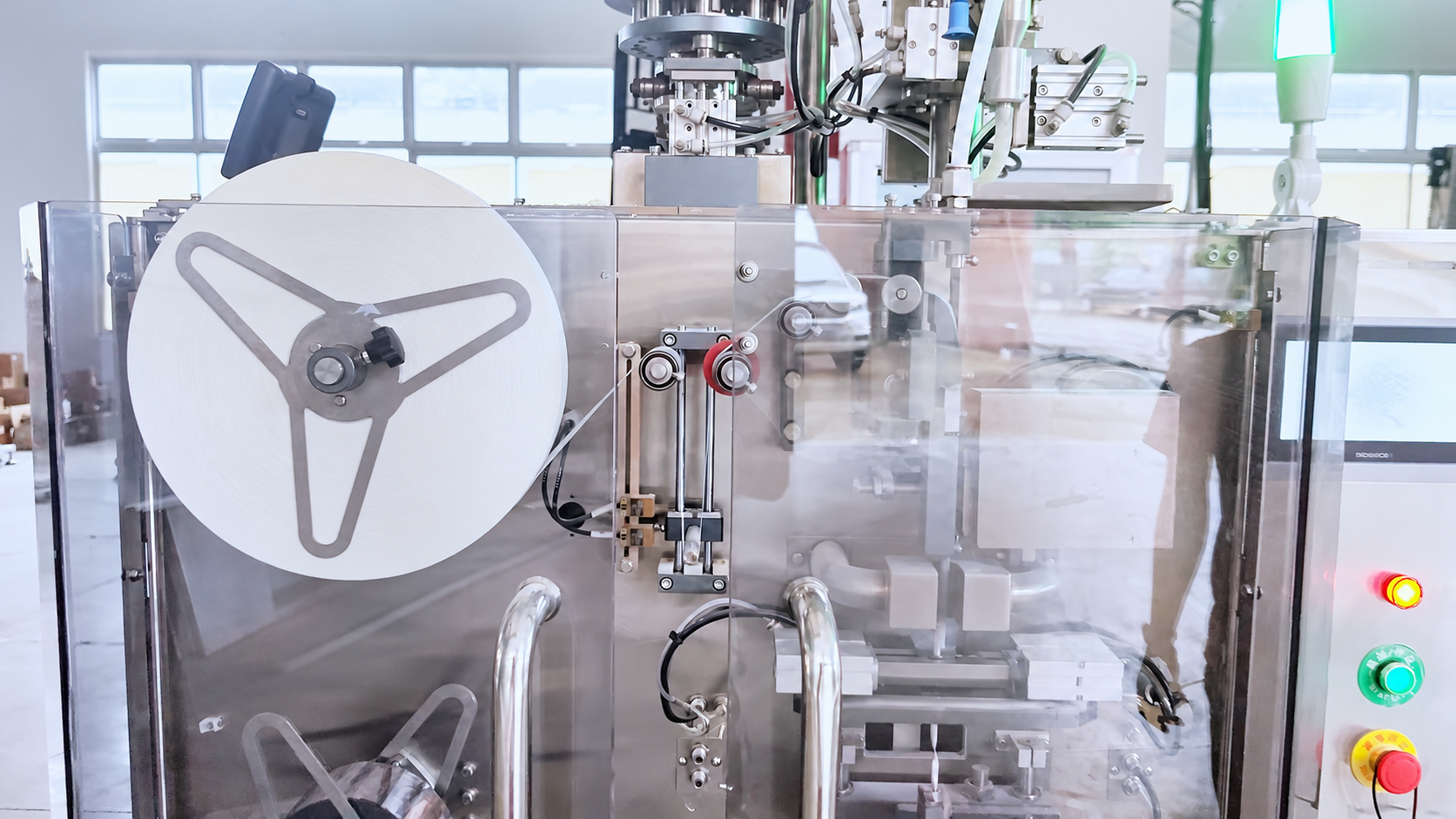
- Pouch size and film: width, length, non-woven grade and seal method must match the forming set.
- Required output: define pouches per minute and whether that figure is per lane or for the complete line.
- Final pack: confirm whether pouches discharge loose, enter an individual outer wrap or continue to can filling and labelling.
Compare documented operating ranges
| Machine | Documented use | Listed output | Fill range |
|---|---|---|---|
| Entry-level bag-in-bag | Trials, small batches, inner + outer pouch | Up to 40/min | 0.4–0.7 g |
| High-speed single-lane | One defined inner-pouch format | 180–220/min | 0.4–0.6 g |
| Four-lane | Parallel higher-output pouching | 30–45/min per lane ×4 | Confirm by material test |
| Automatic line | Pouching plus downstream packaging | Confirm by line balance | Confirm by material test |
Use samples before final configuration
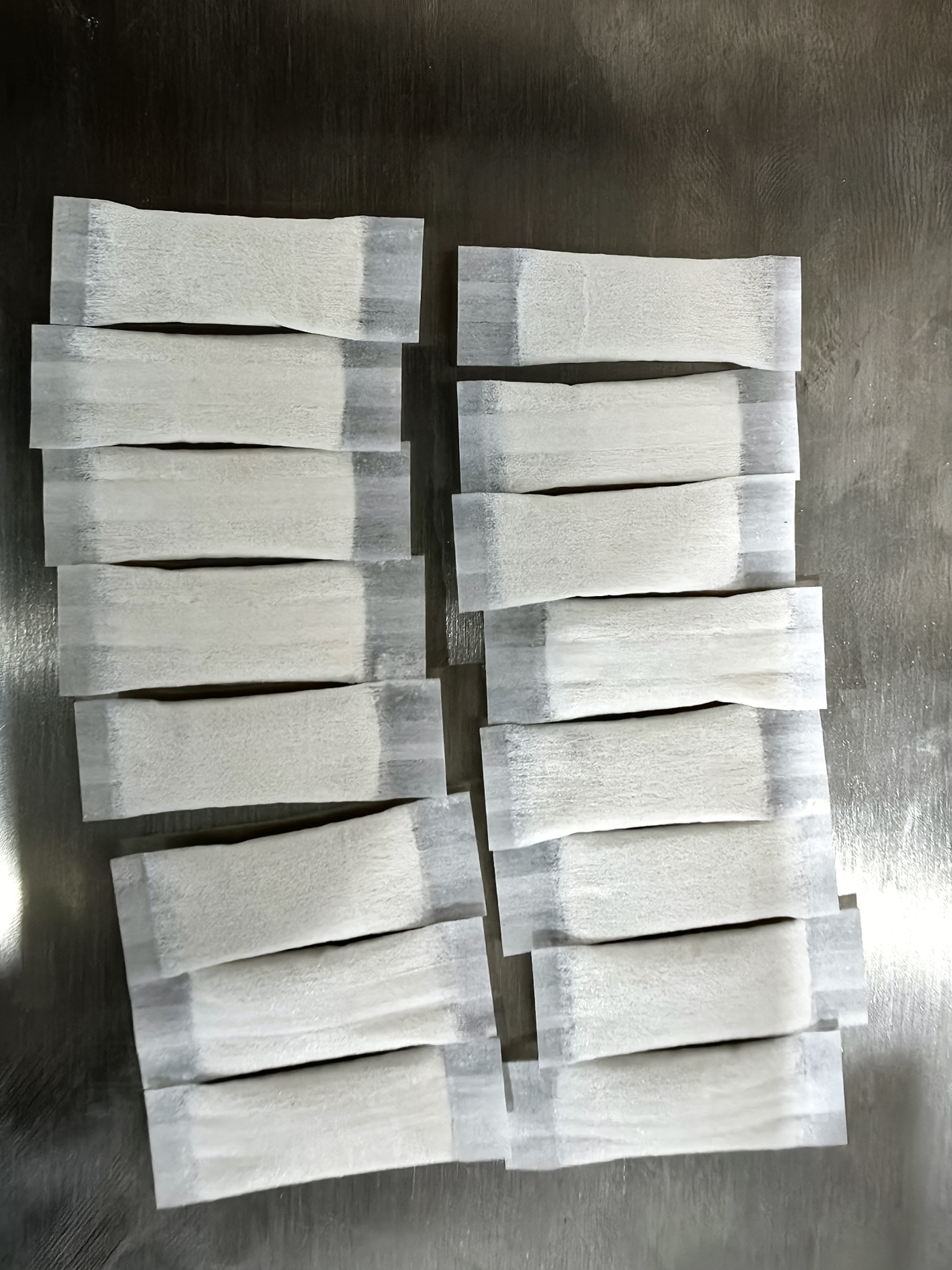
A physical product and film sample allows the supplier to confirm flow, dose stability, seal appearance and the transfer into the next packaging stage. Published values are a screening tool, not a substitute for a final test.
Common questions
Should I start with a single-lane or multi-lane machine?
Start with the required output and the stability of the product format. A single-lane machine may be easier to configure around one pouch, while multiple lanes increase parallel capacity and line-balancing requirements.
Can one machine handle every material?
No. Moisture, particle size, flow and static behaviour can change dosing performance. Confirm the filling method from a representative sample.
What information should I send for a quotation?
Send the material description, target fill weight, pouch dimensions, film information, desired output and the next packaging stage.