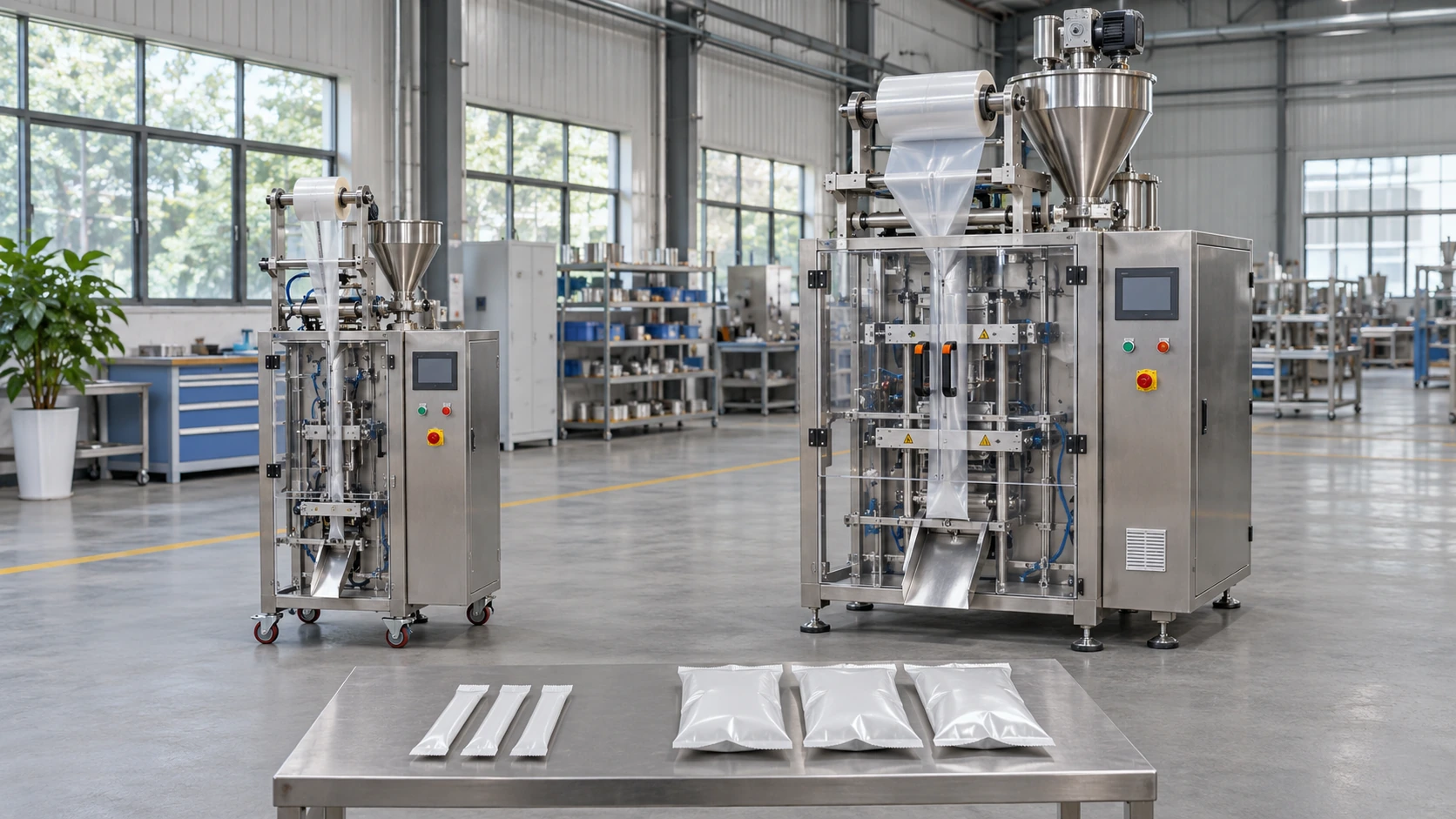
The cost of a packaging machine depends on the machine model, dosing system, and options included in the quote. At TORVEKA, we start with the product, finished pack dimensions, target fill weight, and required output. These details determine which machine frame fits the job, how the product should be measured and filled, and what the installed equipment will need to accommodate. Features such as date coding, automatic feeding, and inspection can change the total even when the base machine stays the same.
What determines the price of a packaging machine?
| What to specify | What it determines | Why it affects the quote |
|---|---|---|
| Bag type, width, and length | Machine model, forming or pouch-handling components, and sealing configuration | A narrow stick pack and a wide back-seal bag can require different frames and tooling. |
| Product, target fill weight, and acceptable weight variation | Dosing method, dosing equipment size, and trial requirements | Fine powder and free-flowing granules may need different feeding and dosing systems. |
| Required output and pack sizes | Machine configuration and how many formats the system must handle | Higher output or multiple formats can affect equipment selection and changeover parts. |
| Available floor space, ceiling height, and utilities | Installed layout, including any feeder and discharge conveyor | An integrated system can take up more space than the base machine alone. |
| Date or batch coding and other options | Which modules are included | A coder, feeder, checkweigher, or reject system can each change the total. |
Why can two powder packing machines cost so much differently?
Consider a machine for small powder stick packs and a vertical machine for larger back-seal bags. The stick-pack project starts with a narrow format and a small dose. The back-seal project may call for a larger forming assembly, a different dosing configuration, and more room for feeding the powder into the machine. A quote for either project starts with the actual bag and fill specifications.
The TORVEKA vertical powder packing machine for back-seal bags lists a fill range of 0.1–1.5 kg, a bag width of 90–210 mm, and a packaging speed of 30–55 bags per minute. Those specifications give you a starting point for model selection. The achievable output for your project depends on the powder, film, finished bag dimensions, and selected configuration. If your project uses several bag sizes, send the dimensions and target weight for each one so we can check which sizes fit the same machine and which require changeover parts.
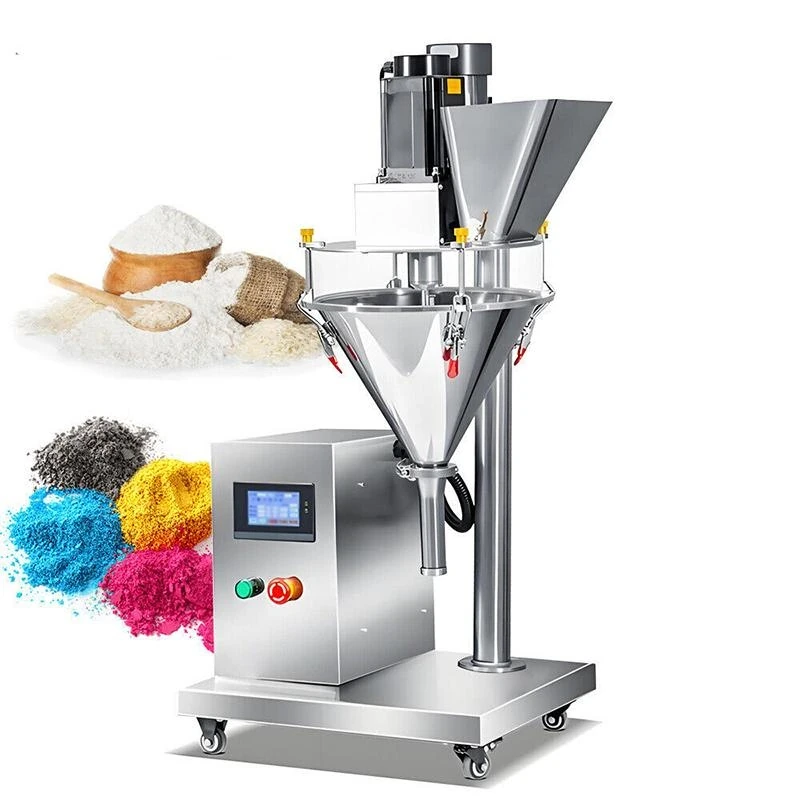
Auger filling example.
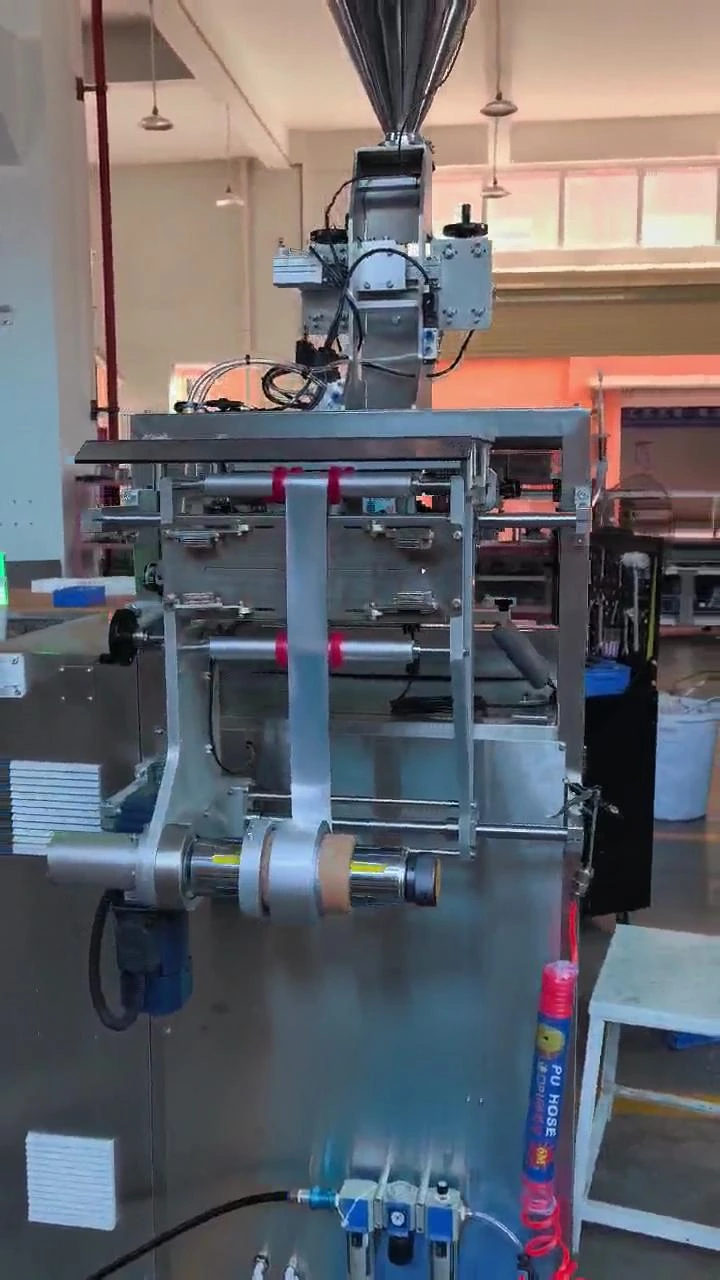
Film path, forming tube and sealing area.
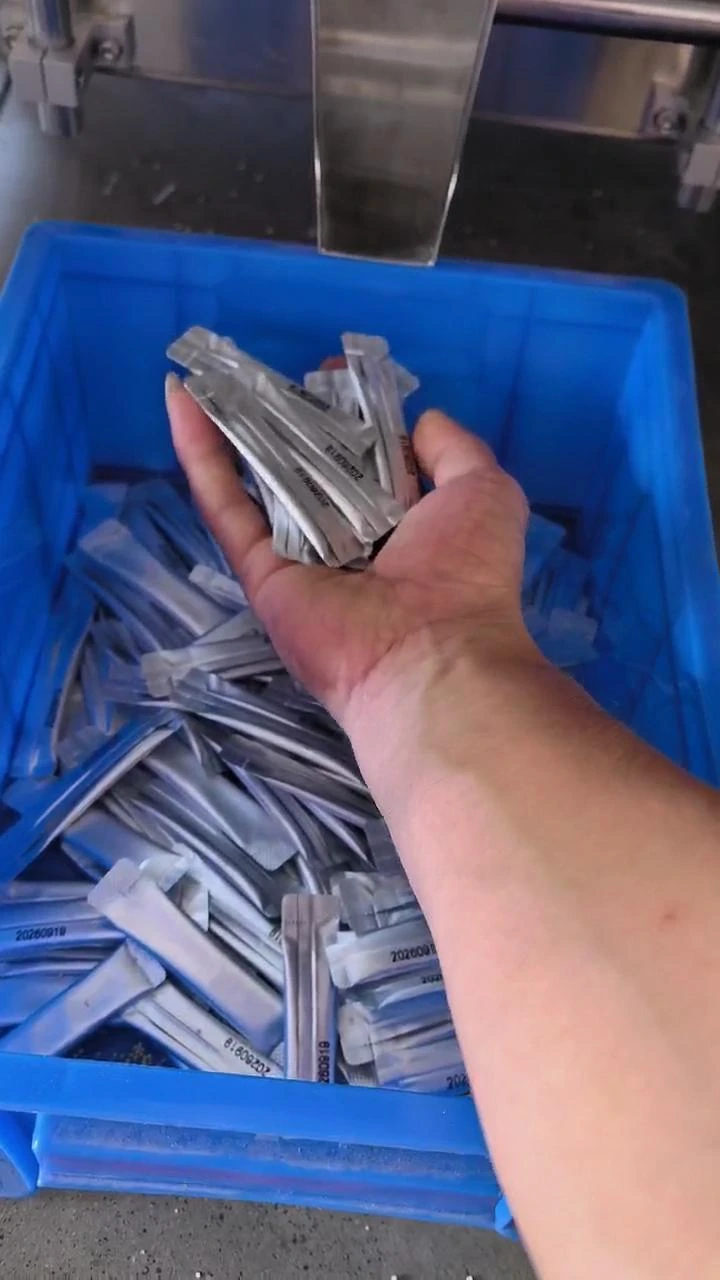
Samples from the compact configuration shown.
For a powder project, we also review how the material flows and whether its bulk density varies. This helps specify the dosing equipment and identify what to check in a material trial. See our guide to choosing a dosing system for powder and granule packaging machines.
How much does date or batch coding add?
First decide whether the line needs to mark a production date, expiry date, batch number, or another code. Then specify the packaging material, the marking location, and the number of lines to print. A photo or sample of the finished bag helps identify where the code will be placed.
Thermal transfer overprinting (TTO) uses a ribbon to print variable information on compatible flexible packaging film. Laser coding creates a mark directly on a compatible packaging surface. The choice depends on the material, the required mark, and where the coder can be integrated into the line. If the material is still being selected, ask for a marking test on the film you plan to use.
Direct thermal paper printing is a separate process. A heated printhead develops a mark in heat-sensitive paper or label stock without an ink ribbon. TTO instead transfers ink from a ribbon. The comparison below shows direct thermal paper printing alongside one laser ink-removal example on compatible printed film. Select the printing method against the actual paper, label or film; ordinary packaging film is not automatically suitable for direct thermal printing. Thermal printing terminology reference.
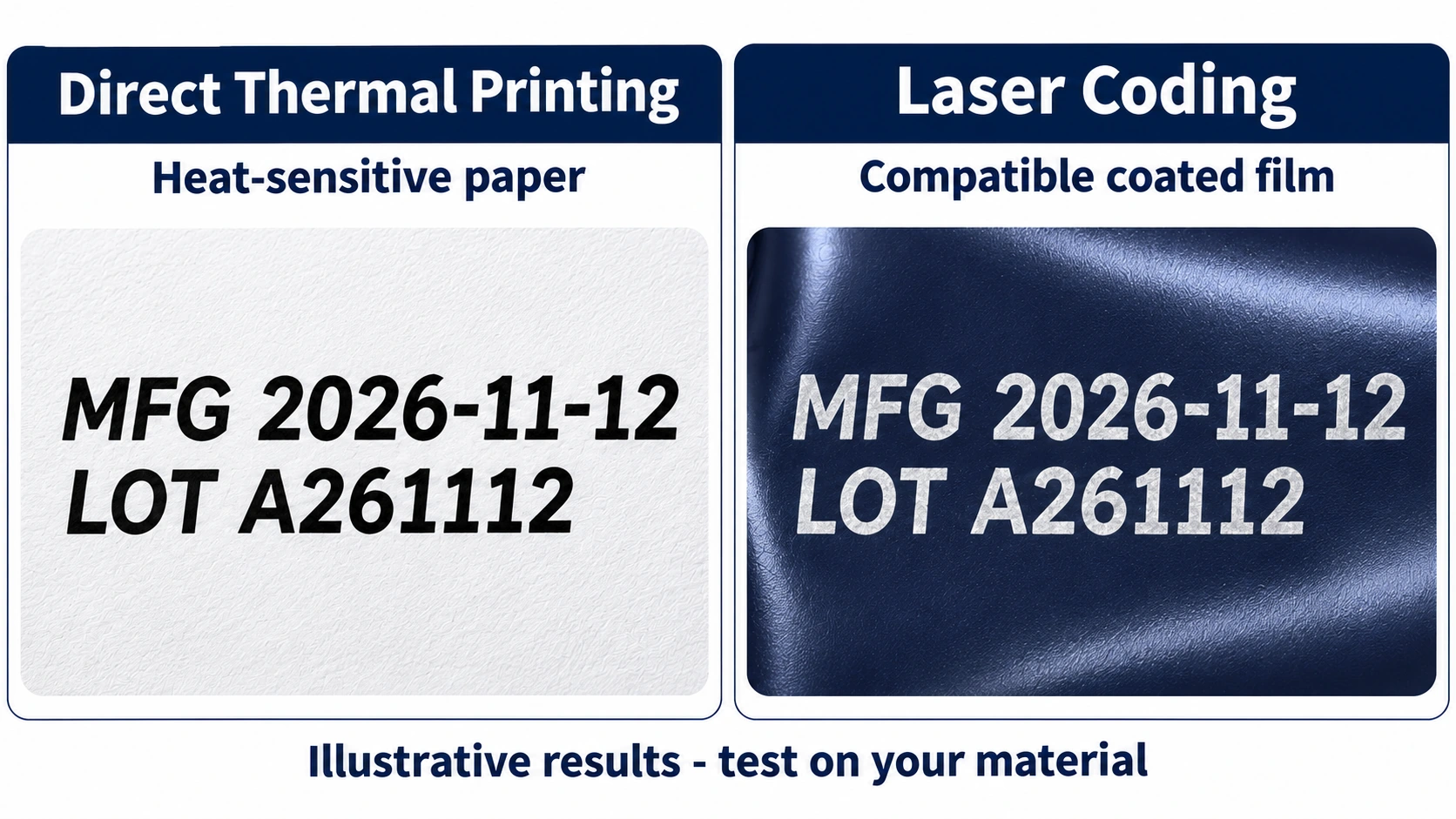
In some configurations, one coding option can cost around three times as much as the other. That difference applies to the coding option. Ask for separate line items for the coder, mounting, and integration so you can see how each option affects the full equipment quote.
How do you compare two packaging machine quotes?
Ask both suppliers to quote for the same product, finished bag, fill weight, and required output. Then compare what each price covers.
- Base equipment — machine model, dosing system, and forming or pouch-handling parts for each agreed format.
- Options — coding, feeding, conveying, inspection, or rejection equipment, where required.
- Performance and acceptance — test material, film or pouches, target output, acceptable fill-weight variation, and seal checks.
- Delivery and support — crating, freight terms, installation, training, and spare parts. Ask which items are included and which are quoted separately.
When comparing an equipment-only quote with an integrated line quote, ask for an itemized equipment list and an installed layout. This shows what you would need to source separately and how much space to allow.
What should I send to get a TORVEKA quote?
- Product — what you are packing, with a photo or sample if available. For powders, include bulk density or flow information if you have it.
- Finished pack — bag style, width, length, and film material if known. A drawing or finished bag photo is helpful.
- Fill and output — target weight per bag, acceptable weight variation, and required packs per minute or per shift.
- Options — whether you need date or batch coding, automatic feeding, inspection, or other functions. If you need coding, tell us what needs to be printed.
- Installation — destination country, available space, and any existing upstream or downstream equipment the machine must connect to.
Request a packaging machine quote from TORVEKA. Send your product details and a photo or drawing of your finished pack. We can use them to recommend a machine model, specify the dosing system and equipment dimensions, and itemize the options for your project.
Frequently asked questions
Can you quote if I know the fill weight but haven’t chosen a bag size?
Send the fill weight, product details, and any sample packaging you have. We can discuss possible formats first. The finished bag dimensions help confirm the machine model and forming parts before a configuration-specific quote.
Do I need to choose between laser coding and TTO before requesting a quote?
You can start with the film or pouch material and the code you need to print. Ask which methods are compatible and request separate pricing if both are suitable.
Can one machine handle more than one bag size?
It depends on the model and the range of sizes. Send all your bag dimensions and fill weights so the quote can identify which formats share tooling and which require separate parts.