Stick Pack Packaging Cost: Co-Packing vs. Buying a Machine
Thinking about producing stick packs in-house? Before comparing machine quotations, work out what a finished, saleable stick actually costs. A low filling price may come with a high minimum order, while owning a machine brings labor, maintenance and setup costs that are easy to overlook.
This guide explains the costs behind stick pack packaging, uses a historical small-business quotation as an example, and shows how to evaluate single-lane and multi-lane machines for powders such as electrolyte mixes, coffee, sugar and nutritional blends.
What Is Stick Pack Packaging?
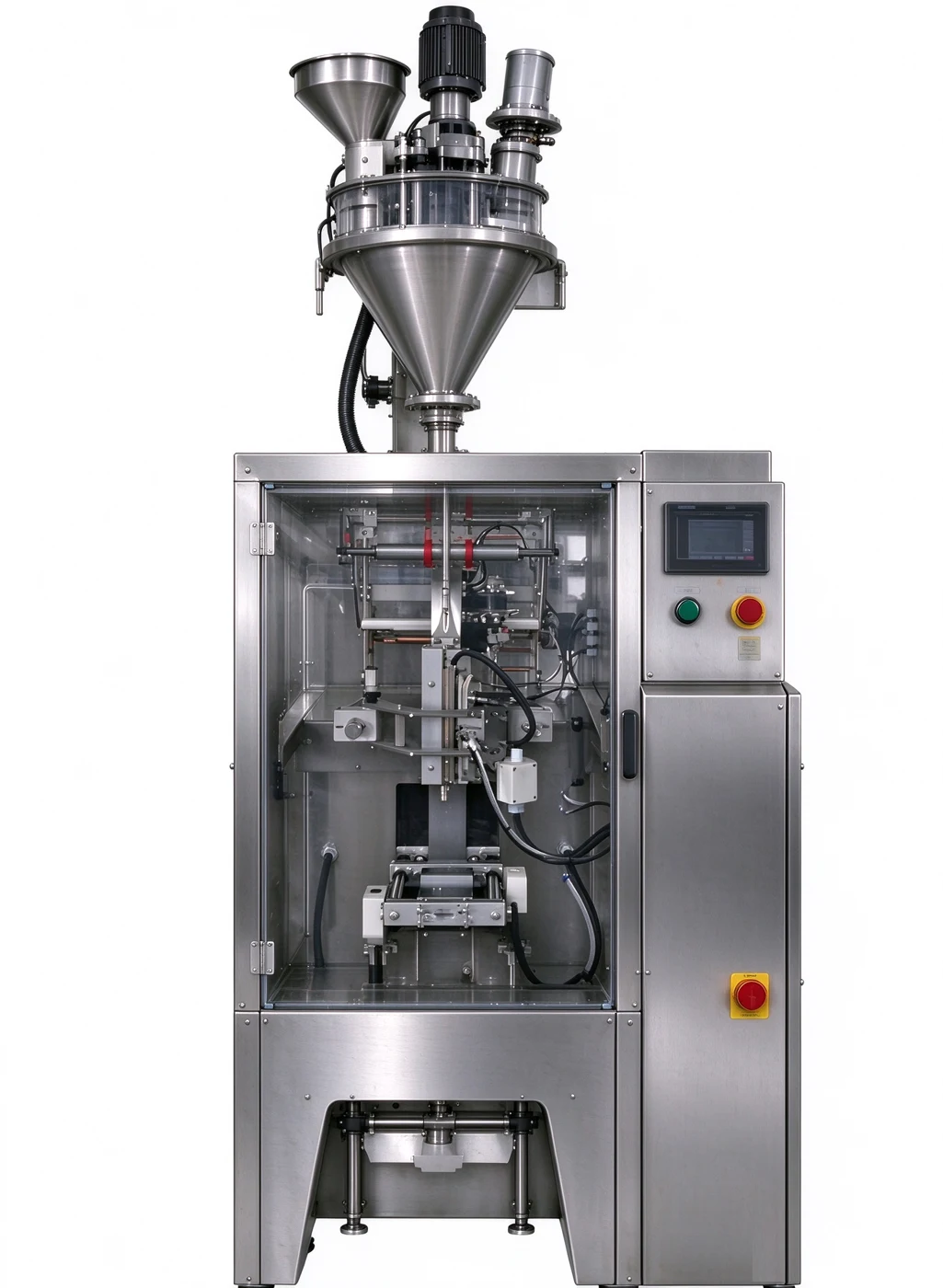
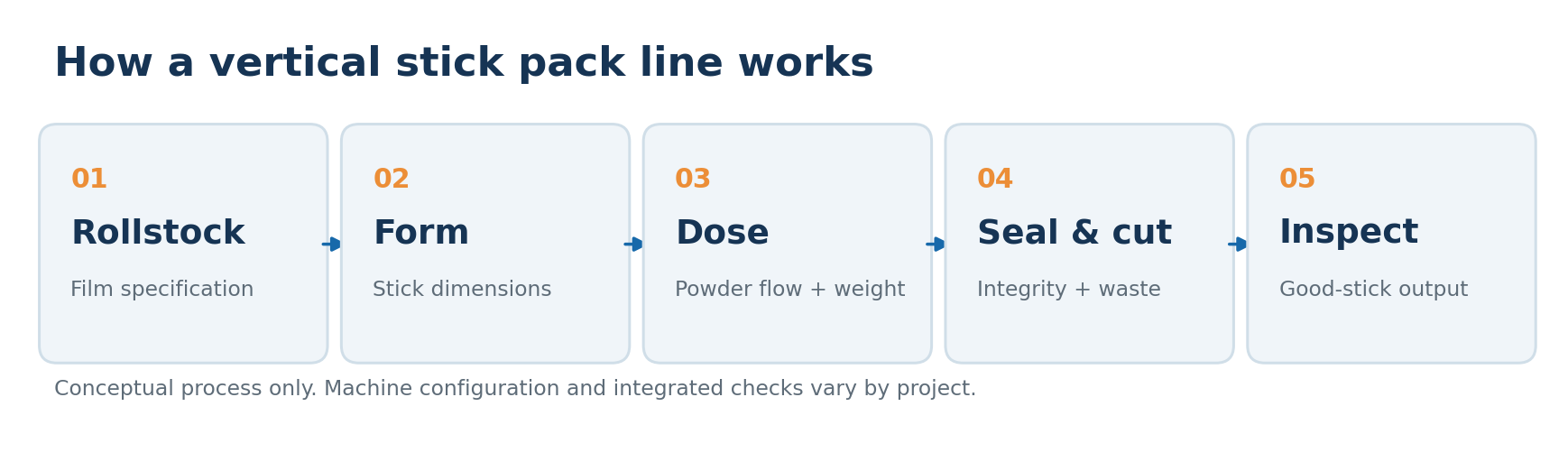
A stick pack is a narrow, sealed single-serve sachet made from flexible film. A typical vertical form-fill-seal stick pack machine unwinds rollstock, forms a tube, doses product, makes longitudinal and end seals, and cuts individual sticks.
The format is used for dry powders and granules, including instant beverages, coffee, sugar, electrolyte mixes and some supplement products. Different materials require different dosing, dust-control and sealing arrangements. A machine suitable for free-flowing sugar is not automatically suitable for a fine, sticky or moisture-sensitive powder.
How Much Does Stick Pack Co-Packing Cost?
In a public 2024 Reddit discussion about launching an electrolyte powder product, a founder described moving from nearly 1,000 manually packed servings toward commercial batches. The founder reported these filling-only quotations:
| Batch quantity | Fee per stick | Fee per 30-stick pack | Filling total |
|---|---|---|---|
| 10,000 sticks | US$0.18 | US$5.40 | US$1,800 |
| 50,000 sticks | US$0.07 | US$2.10 | US$3,500 |
Source: figures publicly shared by the founder in a 2024 discussion. These are historical, anecdotal quotations—not current market averages or TORVEKA prices. The per-pack figures assume 30 sticks per retail pack and exclude powder, film, secondary packing, freight and other charges.
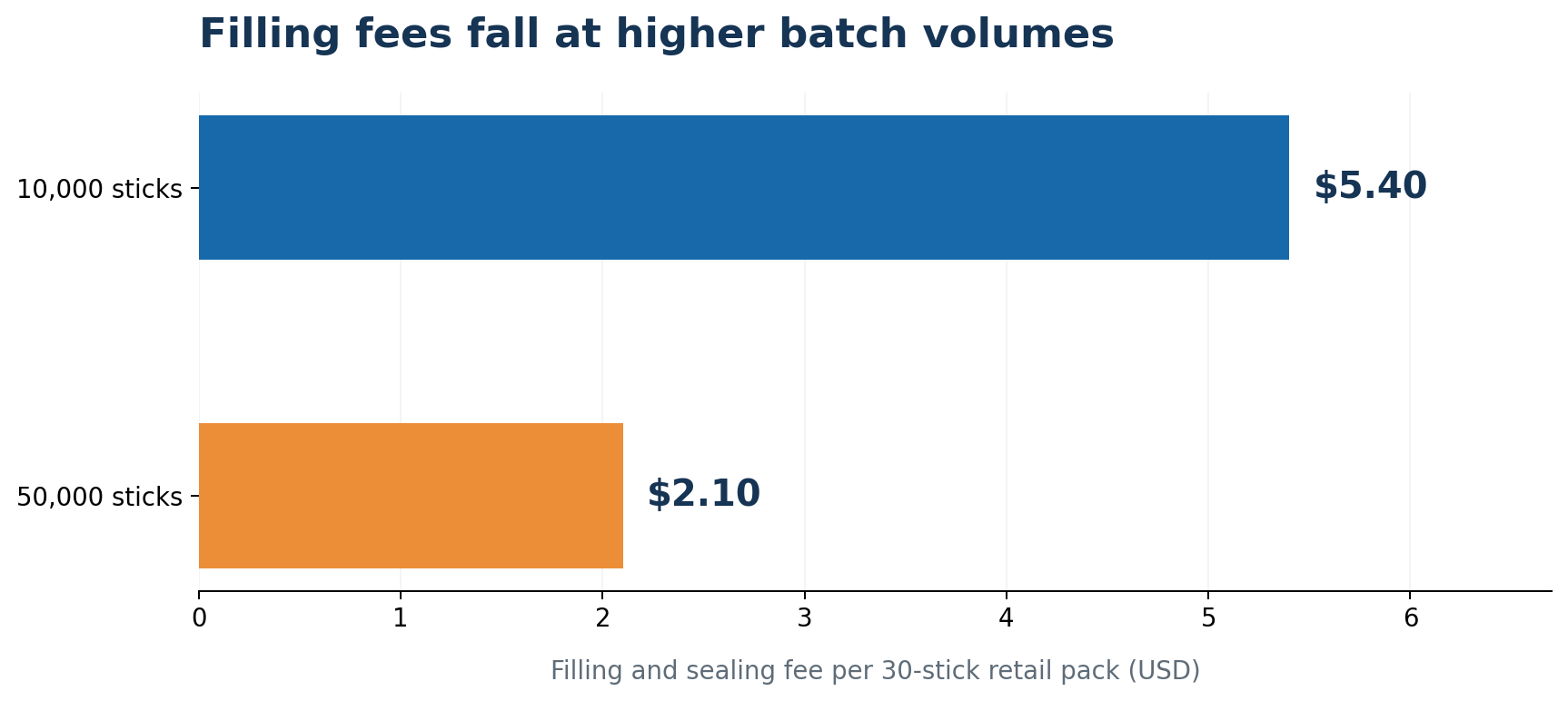
The larger order reduces the quoted filling fee by US$0.11 per stick, or US$3.30 for 30 sticks. But the buyer must spend US$1,700 more on filling upfront, provide 40,000 additional servings of product, and find space and customers for the added inventory.
That is the small-batch trade-off: a lower unit price is not necessarily a lower-risk purchase. If the product or flavor is still being tested, the cost of unsold stock can outweigh the filling savings.
What Should a Co-Packing Quotation Include?
Two suppliers can quote the same price per stick while covering very different work. Ask for an itemized total covering ingredients and film where included, setup, filling and sealing, expected scrap, counting or secondary packing, storage and freight.
In the same Reddit discussion, the founder said the practical filling minimum was 10,000 sticks, but ordered 50,000 printed-film impressions because shorter print quantities were less economical. This illustrates why the filling minimum and film-printing minimum must be checked separately. One impression should not be assumed to equal one acceptable finished stick without confirming the film layout and expected waste.
If you plan multiple flavors, ask whether each flavor or printed design has its own minimum. Also agree on who owns and stores unused printed film if you change co-packers.
Co-Packing or In-House Production?
Neither route is automatically cheaper. The right choice depends on repeat demand, production flexibility and available staff.
For a new brand with uncertain sales, outsourcing may preserve flexibility. For a manufacturer with predictable reorders, multiple established products or costly production delays, an in-house machine deserves a closer look.
When Does Buying a Stick Pack Machine Make Financial Sense?
Start with the cost per saleable stick, not the machine’s advertised maximum speed.
For outsourced production, include the co-packing fee, setup, freight and any scrap or additional services you pay for. For in-house production, include operator labor, electricity, consumables, cleaning, maintenance and losses. Treat ingredients, film and retail multipacking consistently on both sides so the comparison is fair.
Then estimate:
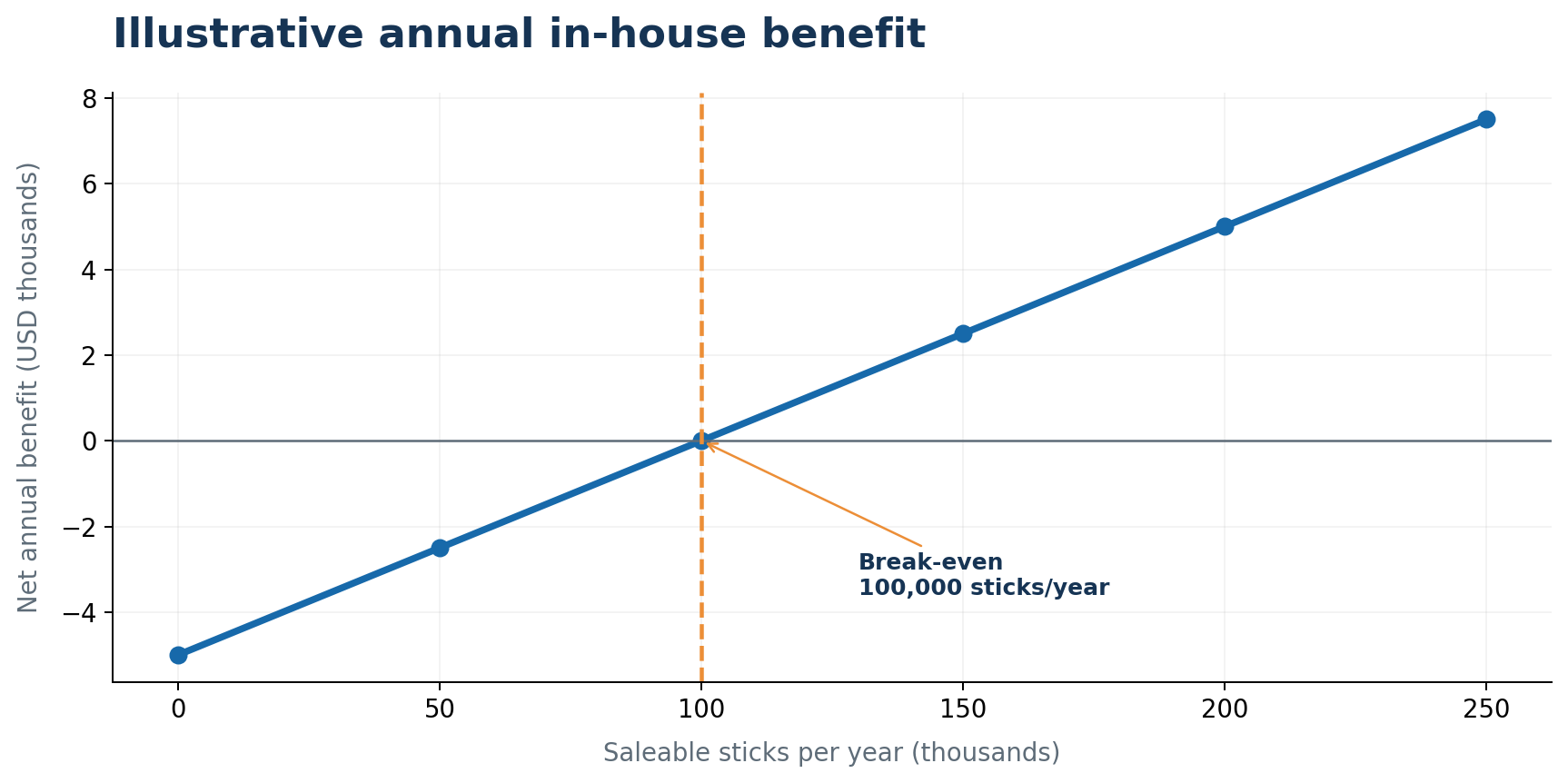
Annual net benefit = (outsourced variable cost per saleable stick − in-house variable cost per saleable stick) × annual saleable sticks − additional annual in-house fixed costs
If the variable saving is positive:
Annual break-even volume = additional annual in-house fixed costs ÷ variable saving per saleable stick
For example, suppose internal production saves US$0.05 per acceptable stick before fixed costs, and the added annual fixed-cost burden—including an appropriate annual equipment cost—is US$5,000. You would need 100,000 saleable sticks per year to cover that burden. At 200,000 sticks, the same assumptions yield US$5,000 in annual net benefit.
This is a hypothetical illustration, not a TORVEKA performance or savings guarantee. Purchase cash flow, financing, taxes, utilization and working capital also matter.
The practical question is whether your existing, repeatable demand is close to the calculated volume—not whether you hope future sales will reach it.
Single-Lane or Multi-Lane: Which Fits Your Production?
A single-lane stick pack machine can make sense when production volumes are modest, product development is ongoing, or frequent changes are required. Multi-lane stick pack machines make several sticks in parallel and may be better suited to sustained, higher-volume production, provided demand and downstream handling justify the investment.
Single-Lane Stick Pack MachineEvaluate a single-lane configuration for your batch size, material and format changes.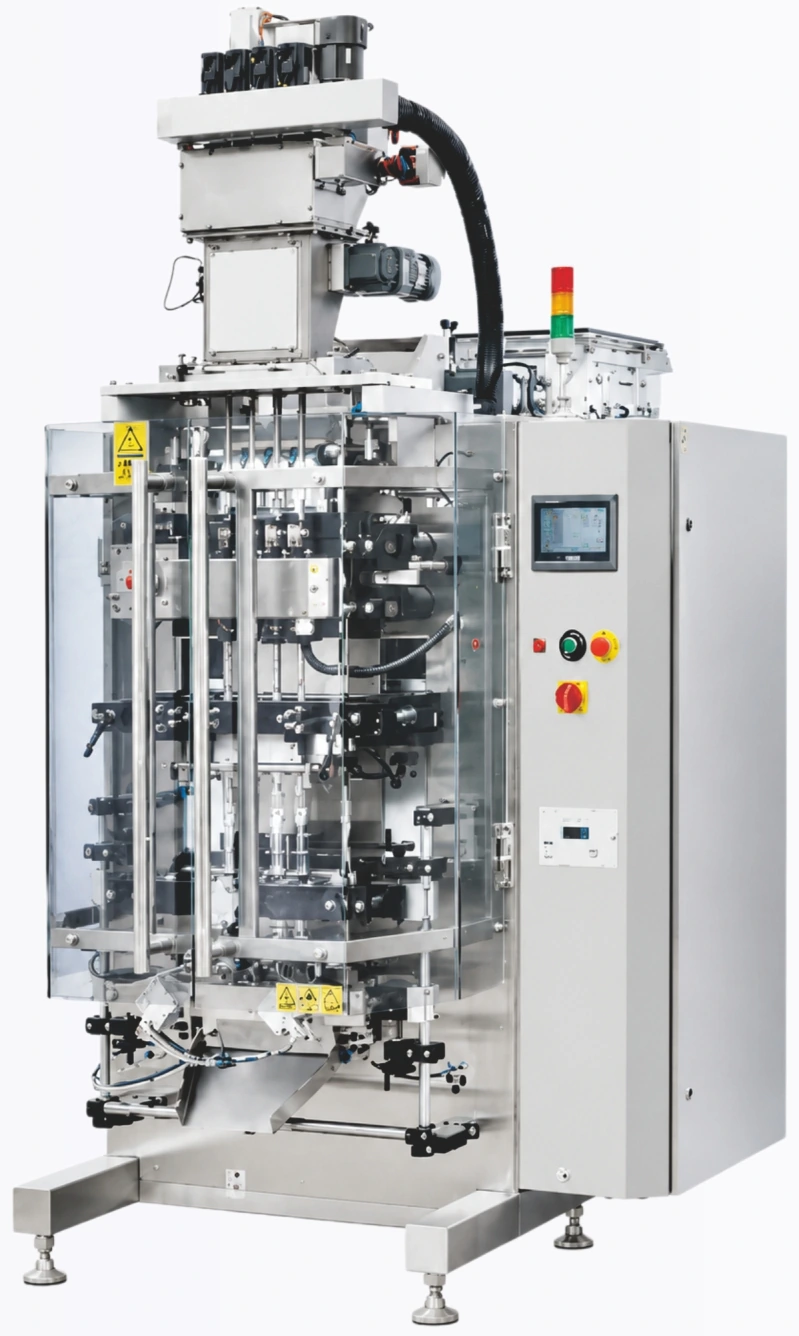 4/6-Lane Stick Pack MachineEvaluate parallel lanes when sustained demand and downstream handling justify the configuration.
Calculate required output before selecting a lane count:
Required good sticks per production minute = batch quantity ÷ available production minutes
If you need 50,000 acceptable sticks in 20 productive hours, your requirement is approximately 42 good sticks per minute. Add realistic time for cleaning, startup, film changes, stoppages and rejects when planning the full shift schedule.
Ask the machine supplier to document:
- Demonstrated good-stick output with your product and target fill weight.
- Filling accuracy and the method used to measure it.
- Supported stick dimensions and film structures.
- Dust management, sealing quality and reject handling.
- Time required to change product, fill weight and film format.
- Availability of spare parts, training and technical support.
The number of lanes alone does not establish useful capacity. A faster line that creates unacceptable seals or high scrap may cost more per saleable stick.
Match the Dosing System to Your Powder
The powder’s behavior matters as much as the pack size.
- Free-flowing granules: Depending on the material and accuracy target, volumetric cup or other suitable dosing systems may be considered.
- Fine or poorly flowing powders: An auger-based system is often worth evaluating, subject to tests for bridging, aeration and buildup.
- Dusty, hygroscopic or sticky blends: Ask about hopper design, dust extraction, product contact surfaces and moisture control; confirm that the seal area remains clean.
- Sensitive products: Review hygiene, traceability, cleaning and applicable product-specific compliance requirements before specifying the line.
No dosing system should be selected solely from a product category name. A sample trial with the actual formulation is the most useful evidence. See the powder and granule dosing system guide for the main selection differences.
What Should You Test Before Buying?
Send the supplier your product sample, target grams, desired stick width and length, preferred film structure, expected batch size and monthly volume. A meaningful trial should record:
- Fill-weight results: Multiple consecutive samples against an agreed tolerance.
- Seal integrity: Visual and appropriate functional tests, including checks for powder in the seal.
- Good-stick output: Acceptable sticks per minute, not merely mechanical cycles.
- Startup waste: Film and product consumed before stable production.
- Changeovers: Cleaning time and time to the first acceptable stick after adjustment.
Ask for an itemized quotation listing the dosing unit, machine configuration, coding, feeding, conveyors, inspection and any counting or cartoning equipment. This prevents an equipment-only quote from being compared with a more complete line. The packaging machine cost and quotation comparison guide explains what to include when comparing proposals.
Frequently Asked Questions
Can one machine pack coffee, sugar and electrolyte powder?
Potentially, yes, but the suitable dosing and sealing configuration depends on each material’s flow, particle size, moisture sensitivity and target weight. Test each important formulation before assuming one setup works for all of them.
Can I use printed film purchased for a co-packer?
Possibly. The new machine supplier must verify film width, laminate, sealing layer, print repeat, registration marks and unwind direction. Send the specification and sample roll before committing to a machine or new print order.
Does a stick pack machine automatically make 30-stick retail packs?
Not by itself. Counting, grouping and cartoning are separate operations unless specifically included in the production line quotation.
Is a multi-lane machine always the lower-cost choice?
No. Compare cost per acceptable stick at realistic utilization, including changeovers, scrap, labor and the additional investment. A single-lane system may be sufficient for smaller or frequently changing batches.
Discuss Your Stick Pack Project with TORVEKA
Whether you are packaging coffee, sugar, beverage powder or another dry product, the right machine starts with your actual material and production target.
Tell TORVEKA your product, grams per stick, finished stick size, film preference, batch size per SKU and expected monthly output. If available, include a product sample and an existing stick or rollstock specification. We can review suitable dosing, sealing and lane configurations and discuss a trial based on your requirements.